66 Iconic Route 66 Stops to See for the 100th Anniversary
Route 66 is one of the most iconic scenic drives in the U.S. Nicknamed the "Mother Road," this highway dates back to 1926 and was the first highway to be fully paved, making it essential for travelers and the transportation of goods and services from Chicago to Santa Monica, California. Spanning more than 2,440 miles and traveling through eight states, this highway is the ultimate road trip journey.
This year, there are plenty of reasons to celebrate 100 years of road trip joy and magic—here are 66:
1. Ohio House Motel, Illinois
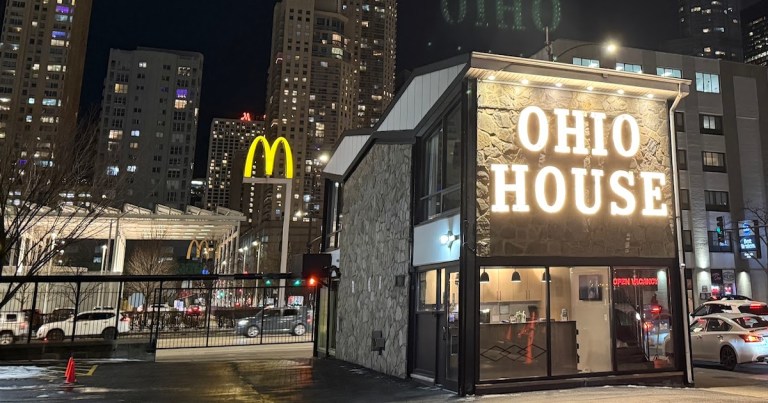
The Ohio House Motel is an improbable survivor. In a city where real estate is ruthless, this diamond-roofed, mid-century inn has held its ground since 1960. It feels like a movie set dropped into the middle of the River North bustle—retro, defiant, surprisingly cool, and one of the very few motor inns left in downtown Chicago. It represents the era when you could drive your family sedan right into the heart of the metropolis and park outside your door.
The architecture is pure Googie style, promising a jet-age future. As a site in the starting point city—historically, Route 66 travelers usually only traveled away from Chicago—expect the Ohio House to be a base camp for many Centennial rallies. It’s the perfect place to rest up before officially hitting the road at the "Begin Route 66" sign on Adams Street. Ask for a room facing the street for the full neon experience.
2. Joliet, Illinois

Joliet is a town of stone and steel that has shed its once-rough reputation to embrace its role in pop culture and along the Mother Road: It’s the first major city stop outside Chicago. The Old Joliet Prison is legendary, and standing outside its limestone walls feels like stepping into the opening scene of The Blues Brothers.
The Rialto Square Theatre is one of the most beautiful old vaudeville palaces in the U.S. The prison is planning Centennial "Jailhouse Rocks" concerts and expanded Guard Tours for 2026. The Rialto often hosts Route 66 film festivals. Don't pass up a stop at the Rich and Creamy ice cream stand on Broadway Street, with statues of the Blues Brothers dancing on its roof.
3. Gemini Giant, Illinois

At 30 feet of pure, towering kitsch, the Gemini Giant stands tall in his silver space helmet, holding a rocket ship, king of the iconic Muffler Men. The giant is, essentially, the cover model for Illinois Route 66. These fiberglass giants were advertising tools in the 1960s, and the Gemini Giant is one of the best-preserved examples of the Space Age obsession that gripped the country during that decade. He formerly watched over the Launching Pad Drive-In, greeting travelers with a stoic, fiberglass gaze.
It is a mandatory photo stop for the 2026 passport. The Giant has been relocated to a refurbished site in Wilmington for the centennial, and an interpretive site has been erected to give you the story of Wilimington's place in Route 66 history. You can find Mother Road memorabilia at the recently-opened Landing Pad, a seasonal souvenir shop near the giant.
4. Ambler’s Texaco Gas Station, Illinois

Ambler's Texaco Gas Station in Dwight offers a nostalgic step back to 1933. This cottage-style station was designed to fit into a residential neighborhood, looking more like a dollhouse than a garage. It’s quiet, pristine, and evocative of a time when gas station attendants wore bow ties. It was the longest-operating gas station on the entire route (until 1999), and it dispels the myth that Route 66 was all neon and noise; this is the domestic, small-town side of the Mother Road. The station serves as a visitor center now.
In 2026, volunteer "attendants" will likely be dressed in period uniform, enacting vintage car service for photo ops. Be sure to go inside if you visit when it's open. The interior is set up with vintage oil cans, maps, and a guest book that people from all over the world sign. It’s a great spot to stretch your legs and chat with the local volunteers.
5. American Giants Museum, Illinois

A bright, joyful tribute to advertising history, the new American Giants Museum feels like a shrine to the fiberglass era. It's the only museum in the country dedicated solely to Muffler Men. The museum's colorful, well-curated dedication to preserving these lumbering commercial relics is oddly touching. It explains why we are collectively obsessed with icons like the Gemini Giant and the Paul Bunyan statue across the street. (It is literally across the street from the Bunyon statue, making Atlanta a twofer stop on Mother Road.)
This year, expect "Meet the Collector" events and workshops on fiberglass restoration. It will be the headquarters for the Giant Hunters community during the Centennial. The museum is small but densely packed with its exhibits. The gift shop is an excellent stop for finding unique 66 merchandise.
6. Paul Bunyon Hot Dog Muffler Man, Illinois

Paul Bunyon (intentionally misspelled) Hot Dog Muffler Man is a 19-foot giant that used to live in Cicero, Illinois... at a hot dog stand, of course. Now, he stands tall in downtown Atlanta, still clutching a giant hot dog. Although he looks slightly out of place (less so with the opening of the new American Giants Museum), the giant has been fully embraced as an icon of the town. He is one of the original Muffler Men giants, and moving him here saved him from obscurity. In turn, he has helped to revitalize the tiny town of Atlanta and a burgeoning interest in Route 66: an inspiring success story of preservation.
He will be fresh off a restoration for the 2026 season. The town of Atlanta closes the streets for "Cruise-Ins" right at his feet. The statue is accessible 24-7. After your photo, but if you arrive during the day, walk a few doors down to the Palms Grill Cafe for a slice of pie to complete the small-town experience.
7. Route History Museum, Illinois

The Route History Museum in Springfield is sobering, educational, and vital. While much of Route 66 celebrates the "freedom of the road," this museum documents the experience of Black travelers who faced segregation, sundown towns, and danger along the route. Its exhibits highlight businesses, such as Green Book sites, that served as safe havens for African American travelers. The museum challenges the romanticized narrative of Route 66, including the resilience of Black entrepreneurs and families.
While the museum focuses on the Black experience, Springfield itself is a site of intersectionality. The museum is located in a city that saw the forced removal of Indigenous tribes just decades before it became a hub for Black migration and travel, highlighting a recurring theme of displacement and movement in this region.
In 2026, the museum plans to have immersive exhibits recreating the experience of a Green Book hotel and a 1940s gas station that served Black customers. The Route History Museum is a must-stop to broaden your perspective on the Mother Road.
8. Original Historic Route 66 Brick Road, Illinois

This 1.4-mile stretch of hand-laid red brick is a visceral experience along the Illinois stretch of Route 66. Surrounded by cornfields, offering a rare window into the route's 1931 alignment, tires hum a different tune here. Most of the route was paved over with asphalt; this brick segment survived. It represents the labor-intensive infrastructure projects of the early 20th century and is arguably the most photogenic stretch of "pavement" in the state.
A Brick Road Preservation Walk is planned for 2026, where visitors can walk the 1.4 miles without traffic to appreciate the craftsmanship. When you reach this stretch, drive slowly—not just for safety, but to hear the sound. Turn off your radio. There's a pull-off for photos; don't stop in the middle of the lane, as it is still a public road.
9. Ariston Cafe, Illinois

The warm, historic, and surprisingly elegant Ariston Cafe doesn't feel like a roadside diner; it feels more like a supper club (and I love a supper club). With its acoustic tiles, original booths, and neon sign, it exudes a sense of culinary permanence. Opened in 1935, it is believed to be the oldest restaurant on Route 66 to have been continuously operated by the same family. It survived the Depression, World War II, and the advent of the Interstate highway system. It is the "grand dame" of Illinois dining on the Mother Road.
The cafe is preparing a "Decades Menu" for 2026 featuring dishes popular in the 1930s, 1940s, and 1950s. Reservations will be essential during the summer peak, so plan ahead. Ariston Cafe is famous for its desserts. Even if you just stopped for lunch, get a piece of pie. Dine with patience, though: the table service here is old-school in the best way.
10. The Pink Elephant Antique Mall, Illinois

Livingston's Pink Elephant Antique Mall feels like roadside sensory overload: a giant pink elephant with a martini glass, a UFO, a generic Muffler Man in a swimsuit, and an ice cream shop shaped like a giant twist cone. Inside, it’s a sprawling antique mall in an old high school. The mall represents the roadside attraction in its ultimate, chaotic form—using its sheer volume of weirdness to get you to hit the brakes. It's, frankly, impossible to drive past without asking, "What was that?"
As you've likely surmised, the owners are collectors of the weird and wonderful. For 2026, expect the outdoor statue garden to grow even larger. Go for the photo ops outside, but stay for the Twistee Treat diner on site. The nachos and ice cream are great road fuel. The antique mall itself is vast, so watch your time if you have miles to cover.
11. Ted Drewes Frozen Custard, Missouri

Ted Drewes is more than an ice cream stand. Since 1929 (and at this location since 1941), Ted Drewes has been the gold standard for frozen custard. It’s an institution where the concrete is so thick that they serve it upside down. The atmosphere is pure nostalgia: neon lights, long lines, and crowds leaning against car fenders on warm summer nights. It's the quintessential roadside treat that defines the end of a long driving day in St. Louis. Order the Terramizzou or a classic Fox Treat. On a warm day, you're likely to run into a crowd, but don't be daunted by the lines: they move quickly.
Look for the "Centennial Concrete" specials. Rumor has it that during 2026, the shop will feature flavors representing the eight states of the Mother Road. The stand will also likely be a checkpoint for the Great Race and Centennial caravans in June.
12. Route 66 State Park, Missouri

Eerie and beautiful, Route 66 State Park sits on the site of the former town of Times Beach, Missouri, which was evacuated in the 1980s due to dioxin contamination and has since been reclaimed by nature. It’s a place of quiet reflection and river valley beauty. The park tells the story of the death and rebirth of Route 66. The visitor center is housed in the old Bridgehead Inn, a 1935 roadhouse that saw the glory days of the route.
In 2026, the park is hosting a "Evolution of the Road" exhibit that focuses on the transition from trails to superhighways. Drive, bike, or walk the old road alignment through the park—it's one of the few places you can walk on original 1930s pavement without traffic—and don't miss the small museum in the visitor center
13. Devils Elbow, Missouri

The approach to the bridge at Devils Elbow is one of the most beautiful stretches of the original two-lane blacktop that remains. The 1923 steel truss bridge curves over the Big Piney River, surrounded by heavy timber and limestone bluffs. The "elbow" was named by loggers who were frustrated by the tight river bend. Today, driving across the bridge feels like floating over the river.
This specific river crossing is also historically significant. The road follows the northern route of the Trail of Tears, and groups of Cherokee people crossed the Big Piney River right here between 1837and 1839 during their forced removal. The present route follows the general alignment of the Teardrop Road, used during the removal.
The bridge has recently been restored and will offer a prime photo opportunity for the Centennial Caravan. Local residents often host a "Bridge Jam" with music during major route events.
14. Uranus Fudge Factory and General Store, Missouri

Uranus Fudge Factory is unapologetically kitschy, loud, and bursting with juvenile humor. It’s a roadside circus of fudge, dinosaurs, and "the best fudge comes from Uranus" jokes. It captures the modern era of the roadside attraction: shock value and heavy merchandising—a veritable masterclass in modern roadside marketing. If you're traveling with kids, they'll love the Uranus Sideshow Museum. Love it or hate it, you will remember stopping here.
Expect massive crowds and special "Centennial Fudge" tins in 2026. The shop is planning a "100 Years of Humor" event series throughout the summer of 2026. Uranus Fudge Factory is located between Rolla and Waynesville. If you prefer a quieter experience, grab your fudge and head to the nearby, and more serene, Route 66 Neon Park.
15. Route 66 Neon Park, Missouri

Route 66 Neon Park is an electric graveyard brought back to life. Located in the George M. Reed Roadside Park, this open-air museum features restored neon signs from defunct motels and diners across Missouri, glowing brightly against the night sky. The park has played a key role in preserving the commercial art of the Mother Road. As businesses closed along the route, their signs were at risk of being lost; this park rescues them.
The park opened in May 2025, just in time for the centennial, and will likely be a major nighttime gathering spot for celebrants and travelers. Expect "Neon Nights" lighting ceremonies at sunset every weekend in 2026. As you likely surmised, dusk is the best time to visit, because that's when the neon tubes buzz to life. Better still, it's free and open-air, making it a perfect quick stop.
16. Rockwood Motor Court, Missouri

Walking into Springfield's Rockwood Motor Court feels like stepping onto a movie set in the 1930s. It’s one of the few motor courts that has been continuously operating since the dirt-road days of Route 66, and it's been meticulously restored to its tourist cabin glory. This hostelry is a rare survivor, as most cabin courts were razed and replaced by motels, many of which were, in turn, gobbled up by national chains. The Rockwood retains the individual stone cottage layout that gave early auto-pioneers a sense of having their own little home on the road.
Rockwood will be at the epicenter of the centennial action. Springfield is the official "Birthplace of Route 66," and the Motor Court will host porch concerts and vintage car meetups during the April 2026 kickoff festival. If you're hoping to stay this year, book way in advance—rooms are limited. Even if you don't stay, stop by to see the neon sign at twilight.
17. College Street Cafe, Missouri

This iconic Springfield eatery sits along the revitalized College Street alignment of Route 66, right in the heart of the Birthplace district, adjacent to the Birthplace of Route 66 roadside park. It’s unpretentious, hearty, and welcoming, and represents the working-class fuel of the road. The northern route of the forced Cherokee removal passed directly through this corridor—as a marker in the park acknowledges—which presents a somber counter-history to the "freedom of the road" usually associated with this stretch and Route 66 in general. Come for breakfast—the biscuits and gravy are the real deal. After eating, walk west to the Roadside Park to view the mosaic walls and the Trail of Tears markers.
The College Street Cafe will likely be the unofficial morning headquarters for the Centennial Parade in May. Expect a Centennial Blue Plate Special and extended hours during the festival.
18. Gary’s Gay Parita, Missouri

Gary's Gay Parita is a time capsule of hospitality. It’s a recreated 1930s Sinclair station that feels more authentic than many originals. Though Gary Turner passed away, his family keeps his spirit of immense kindness alive. It’s cluttered with memorabilia, vintage cars, and "hillbilly" charm. The place became world-famous not for the architecture, but for Gary himself. It represents the "friend on the road" aspect of Route 66: a privately owned, passion-project attraction created out of love for the Mother Road.
Gary's is planning a Centennial Homecoming for travelers. Expect live bluegrass music and perhaps a revival of Gary’s famous watermelon feeds. The site is incredibly photogenic—bring your camera for the classic Sinclair Dino shots, but be prepared to make a purchase: It keeps the lights on and the admission free.
19. Boots Court Motel, Missouri
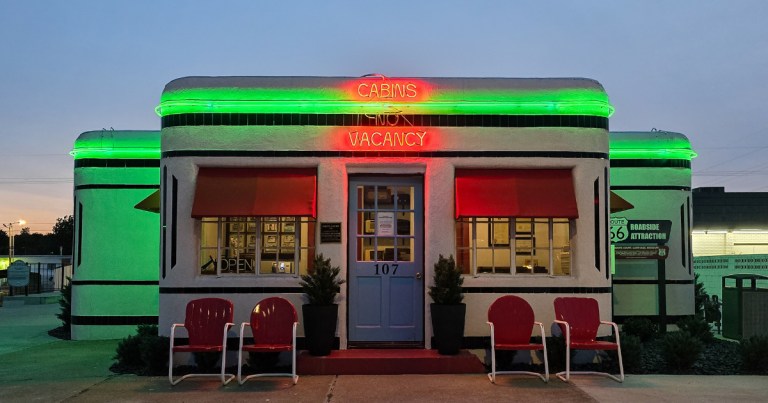
The Boots Court Motel in Carthage is Art Deco perfection at the "Crossroads of America": the intersection of Routes 66 and 71. The motel was saved from near-demolition by local preservationists and is now fully operational. With its green neon and "radio in every room" promise (with authentic 1940s broadcasts), this restored icon looks exactly as it did in 1939. It’s sleek, stylish, and arguably the best restoration project on the entire route. I mean, Clark Gable stayed here: could it be any more iconic?
Unfortunately, Boots Court is fully booked for key 2026 dates, but other dates are still available. The motel is also hosting "Open House" tours of the famous Room 6 (where Gable stayed). If you can’t stay the night, be sure to stop and visit the lobby and gift shop.
20. 66 Drive-In Theatre, Missouri

The 66 Drive-In Theatre in Carthage offers a dose of cinematic magic under the stars. Opened in 1949, it retains its original screen tower and playground. It's one of the few remaining drive-ins directly on the Mother Road. The drive-in captures the post-war boom of car culture and family entertainment, wrapped in the nostalgic smell of popcorn, the crunch of gravel, and the glow of the movie screen reflecting on car hoods.
The 66 Drive-In is planning a Centennial Film Festival, during which it will screen movies featuring Route 66 (such as The Grapes of Wrath and Cars) throughout the summer of 2026. Arrive early (an hour before showtime) to get a good spot and visit the concession stand—the retro intermission reels are part of the show.
21. Galena Route 66 Giant Drive-Thru Shield, Kansas

Today, as you drive along Route 66, you’ll come across attractions that create postcard-worthy photo opportunities, like the giant drive-thru shield in Galena. Pull your vehicle right under the sign for a one-of-a-kind picture on this road trip. This sign stands at an impressive 16 feet tall, with a center cutout measuring 10 feet by 10 feet, allowing most cars, small trucks, and motorcycles to fit through it with ease. And while the size is impressive, so are the gorgeous details. The sign was painted by Sandra Dawn and David Mason, and features a sunflower field (fitting for the Sunflower State) and a tow truck driving off in the distance.
Galena is not only one of the first towns in Kansas you’ll come to if traveling east to west, but it also has a special claim to fame. It is one of the towns that inspired Disney’s movie "Cars." If you look closely at the tow truck on the large drive-thru sign in Galena, it resembles Tow Mater from the movie, driving off into the sunflower field.
22. Cars On The Route, Kansas

As you drive through Galena, Kansas, on historic Route 66, you may come across a few landmarks and landscapes that remind you of the movie Cars. Cars on the Route, an old Kan-O-Tex service station, is one of them. This restored gas station is not only where you can learn more about the Mother Road and its connection to the Disney movie, but outside, you can walk around and snap pictures of vehicles that inspired characters in the movie like “Tow Mater.”
Several vehicles and characters are set up to capture that perfect photo and to celebrate what makes Route 66 so special—why it inspired the movie in the first place. Of course, you’ll also want to spend a few minutes inside, as this restored Kan-O-Tex service station is now a souvenir shop and café.
Fun fact: This historic building is depicted on one of the U.S. Postal Service Forever Stamps honoring the Centennial year of Route 66.
23. Gearhead Curios, Kansas

Years ago, travelers would stretch their legs, refuel, and grab a quick snack at a Texaco station in Galena. The station, built in 1939, served motorists for decades before closing its doors in the early 2000s. However, it didn’t remain closed forever, as renovations to the building began in 2018. In the spring of 2021, a neon lighting celebration was followed by an official ribbon-cutting ceremony, welcoming travelers back to the station.
Today, this station is known as Gearhead Curios and will immediately make you feel like you’ve just stepped back in time. Inside, you’ll be met with a strong nostalgic vibe as you step on an air bell hose, admire the neon signs, and stare at a ceiling covered in hundreds of license plates from around the world.
Gearhead Curios is no longer a popular gas station, but it’s a souvenir shop and information center, a place where you can find some of your favorite Route 66 merchandise. Just make sure that during your visit, you take a look inside the restroom that’s designed from various car parts. It may be one of the most photographed bathrooms in Kansas and along the Mother Road.
24. Old Riverton General Store, Kansas

When Route 66 was a busy highway, travelers and locals alike would stop at the Old Riverton General Store to enjoy good food, shop for unique gifts, and visit with others. Built in 1925, the shop was owned by Leo Williams and was known as the “Williams Store” by locals. It was unique because it was split into two main areas: a commercial area and the home of Leo, his wife, and his daughter. There was also a small gas station located out front. Inside, you could find everything from fresh meat and milk to shoes and clothes.
You can still stop in and enjoy some delicious food and shop for one-of-a-kind gifts today. The Old Riverton General Store is home to delicious sandwiches and a few grocery items. It’s also where you’ll find all types of unique gifts and merchandise. And, it still has much of that nostalgic charm—there’s a little bit of something for everyone here.
25. Rainbow Bridge, Kansas

Approximately 3.5 miles north of Baxter Springs is one of our favorite landmarks along Route 66 in Kansas—Bush Creek Bridge. Better known as the Historic Rainbow Bridge, this unique structure was built in 1923 to connect the small mining towns of Galena, Riverton, and Baxter Springs. However, the bridge dates back even further to the 1910s, when James Barney Marsh patented the concrete and steel design of the structure. The bridge is 130 feet long and was how motorists would cross Bush Creek on Route 66 until the interstate was completed in the 1960s. In 1983, the Brush Creek Bridge was officially placed on the National Register of Historic Places.
Since then, a new bridge has been built east of the historic bridge to better accommodate local traffic. While traffic is rerouted to the newer bridge, it is still possible to drive or walk across the existing bridge. If you find the bridge is empty and you have it all to yourself, park your vehicle for a few moments and snap some pictures. This is a terrific photo opp—one that you’ll cherish for years to come.
26. Andy Payne Memorial Statue, Oklahoma

If you thought driving all of Route 66’s 2,448 miles was a long haul, try running it on foot, and adding another 1,000 miles on top of that. It’s precisely what Andy Payne did, in 1928, 2 years after Route 66 made its debut. A member of the Cherokee tribe and a native of Foyil, a small town on Route 66 in northeastern Oklahoma, Payne won the Great Transcontinental Footrace (aka the Bunion Derby), which spanned from New York City to Los Angeles, traversing much of the Mother Road out west.
It took 84 days for 20-year-old Payne to complete his cross-country journey, earning $25,000 as a prize. After years spent working as clerk for the Oklahoma Supreme Court, and his death in 1977, his hometown of Foyil commemorated their native son with a bronze statue, sculpted by local artist John Free, in 1992. Located on the south side of Foyil, between the original alignment of Route 66 and the modern path of the Mother Road, the statue depicts Payne as he’d want to be remembered: running.
27. Blue Whale of Catoosa, Oklahoma

The largest animal in the world was bound to make a splash when it landed on Route 66 in Catoosa, just northeast of Tulsa. The Blue Whale of Catoosa, a gentle giant perched in a roadside pond, was the imaginative vision of Hugh S. Davis, a zoologist who wanted to create a larger-than-life gift for his wife, Zelta.
A lover of whales, Davis drew inspiration from his wife’s collection of whale figurines, ultimately designing a smiling whale that stretched 80-feet-long and 20-feet-high. With the help of a friend, he welded a metal frame and constructed it with hand-mixed cement, in hopes of gifting it to Zelta for their anniversary. Davis initially wanted to paint it black and white, like an orca, but his wife suggested a more docile species, hence the blue.
Completed in 1972, with porthole-style windows and a slide that plunged into the pond, it was as much a gift as an attraction. For years, travelers could stop and swim at the Blue Whale of Catoosa, and while swimming is no longer allowed, the Catoosa Chamber of Commerce has poured concerted efforts into restoring and preserving this piece of Route 66 iconography. Today, it’s a popular stop for photos and picnics.
28. Buck Atoms Cosmic Curios, Oklahoma

A treasure trove of Route 66 trinkets, art, and souvenirs, Buck Atoms Cosmic Curios—located in the historic Meadow Gold District in Tulsa—is also home base for its namesake “space cowboy,” Buck Atom. A 21-foot-tall Muffler Man, Buck previously sat in a junkyard in Alberta, Canada, until he was restored in 2018, when shop owner Mary Beth Babcock commissioned fiberglass artist Mark Cline to turn the Muffler Man into a new character, with his own lore.
What resulted was the story of Buck Atom, a cowboy who was taken aboard a spaceship for 66 years, until he decided it was time to return to Earth to help bolster traffic on Route 66. Unveiled in 2019, complete with a space visor and cowboy hat, Buck Atom now stands in front of his namesake Route 66 gift shop, which was once a ‘50s gas station. Inside, guests can peruse all manner of colorful books, postcards, art, toys, stickers, and apparel, including special shirts for the Route 66 Centennial. On the other side of the store, guests will find Buck’s counterpart, the “cosmic cowgirl,” Stella Atom.
29. Golden Driller Statue, Oklahoma

Looming large over Tulsa’s Expo Square, the Golden Driller statue is to Oklahoma as the Space Needle is to Washington, or the Statue of Liberty is to New York. At 76-feet-tall, the gilded oilman ranks as one of the tallest freestanding statues in the country, and an unmissable homage to the oil booms that defined Oklahoma’s growth and success. The Golden Driller was first constructed by the Mid-Continental Supply Company for the 1953 International Petroleum Exposition, it was such a hit that the city repurposed it for the 1959 trade show, before donating it to the Tulsa County Fairgrounds.
It’s stood, arm perched astride a towering oil derrick, in front of Expo Square since 1966, officially becoming the state monument in 1979. Free to visit for photo ops, the Golden Driller is a fixture on Oklahoma license plates, and an essential stop on Route 66.
30. Sapulpa, Oklahoma

Just southwest of Tulsa, the town of Sapulpa charms at every turn. Home to about 21,000 people, it’s got the look and feel of a well-preserved small town, right down to its mid-century drive-in, complete with retro trailers for overnight stays.
The route runs right through the heart of Sapulpa, which became an official Main Street community in 1990, thanks to its brick-clad downtown district. Such a designation ensures the continued preservation, and economic investments, in the community, where vibrant storefronts include the Route 66 Vintage Market and Little Bit of Country, a western-themed shop that’s also home to Western Anvil Artisan Metals.
Main Street is also home to the annual Route 66 Blowout, a vintage and modern car show held every September. For the Centennial, Sapulpa is offering the unique opportunity for travelers to take home a piece of the Mother Road—literally. Pieces of roadway, upturned during repairs, are being handed out at Gasoline Alley Classics, three times a year all year long. Anyone interested in taking home a piece of paved history just needs to snag a ticket at the shop, and be in attendance for the drawings.
31. Pops 66 Soda Ranch, Oklahoma

Rising an apt 66-feet over Route 66 in Arcadia, the world’s largest soda bottle beckons curious road-trippers looking for an eccentric pit stop. Welcome to Pops 66 Soda Ranch, a singular attraction in Oklahoma City’s northeast suburbs, which has been slinging quirky sodas and diner-style eats since 2007. Doubling as a retro-inspired service station with a sleek metal-and-glass motif designed by architect Rand Elliot, Pops is a restaurant and gift shop known for its wide array of sodas—available in every color and flavor imaginable.
Hundreds of bottled sodas are on hand, both lining the walls as kaleidoscopic art, and filling the refrigerators with retro classics like grape, root beer, sarsaparilla, and cream soda. Beyond the familiar flavors, though, Pops is best known for its zanier varieties, which run the gamut from bacon and PB&J, to blue cheese, carrot cake, cucumber, and even a “Martian” soda. Although quirky soda is a fixture here, Pops takes its name from founder Aubrey McClendon’s own father, and the restaurant serves soda shop-style fare, like burgers, sandwiches, and root beer bread pudding. At night, that 66-foot soda bottle glows with a rainbow of LED lights.
32. First Americans Museum, Oklahoma

Open since 2021, and anchoring the newly designated Horizons District hugging the south shore of the Oklahoma River in Oklahoma City, the First Americans Museum is a world-class institution for Native American heritage and art. The largest tribal cultural center in the U.S., clocking in at 175,000-sq.-ft., the museum is designed to preserve and celebrate Oklahoma’s 39 Native tribal nations, across multiple exhibits and galleries depicting all facets of Indigenous life in Oklahoma, from early tools and traditional garb, to sports, powwows, and the impact of stereotypes in pop culture.
The museum features a FAMily Discovery Center for visitors of all ages, and a restaurant serving Indigenous-inspired cuisine (think bison tartare, hominy stew, and rabbit tamales). While here, be sure to check out the adjoining Exhibit C Gallery, displaying Indigenous art, and OKANA, an 11-story resort and waterpark owned and operated by the Chickasaw Nation.
33. Lake Overholser, Oklahoma

Flanked by a wildlife reserve and an iconic steel-truss bridge, Lake Overholser casts a spell on road-trippers from its Route 66 locale on the west side of Oklahoma City. A manmade lake, built in 1919, it emerged as an epicenter of outdoor adventure, from the Route 66 Family Park playground and fishing dock, to nature trails and tennis courts. Stinchcomb Wildlife Refuge, on the north end of the lake, is a 1,000-acre wonderland of swamps, marshes, and hardwood forest—perfect for hiking, biking, or paddling.
On the lake itself, visitors can fish, sail, and go boating, while 7 miles worth of trails surround its shoreline. Be sure to check out the Lake Overholser Bridge, on the north side of the lake. Built in 1924, it’s an icon of steel truss construction that initially stood on the original path of Route 66.
34. Oklahoma Route 66 Museum, Oklahoma

When in Rome, do as the Romans do. Or, when on Route 66, go to the Oklahoma Route 66 Museum. Located in Clinton, where wide-open prairies and wind-swept plains offer the quintessential Oklahoma backdrop, the museum is an immersive experience, transporting guests to yesteryear, and the heyday of America’s Mother Road. Oklahoma’s official institution for preserving Route 66 lore, operated by the Oklahoma Historical Society, visitors can discover the characters, efforts, and ideas that paved the way for one of the country’s first federal highways, and the immense impact it had on leisure travel and westward migration.
The Dust Bowl, a key factor in migration, is featured throughout museum exhibits, along with galleries focused on vintage diners and the Big Band Era, a period when roads were populated with roaring rigs and returning soldiers. Throughout the museum, there are treasures to be found—and heard. Including roadside trinkets collected along the Route, classic cars, videos, and the music that defined each era, like The Eagles. Take in a short film at the on-site theater, take a seat in the replica diner, and pause for photos under neon lights and archival signs. The Oklahoma Route 66 Museum is well worth a pit stop.
35. Sandhill Curiosity Shop, Oklahoma

With practically every square inch of its brick facade covered in vintage Route 66 signs, The Sandhills Curiosity Shop—in the western Oklahoma town of Erick—is impossible to miss. As its name suggests, travelers will find a whimsical wonderland of oddities and art, as well as oak furniture, musical instruments, flags, signs, decor, and much more.
It’s all courtesy of heavily bearded owner Harley Russell, a self-described “redneck hoarder” who’s become a veritable mascot in his own right, known for breaking into spontaneous song on his guitar, and enchanting passersby with tales of Route 66 wanderlust. Rich in history all its own, the building is the oldest brick building in town.
36. Tower Station and U-Drop Inn Café, Texas

In the Texas town that inspired Disney’s Cars, one Route 66 icon reigns supreme. The Tower Station and U-Drop Inn Cafe, which inspired the gas station in the animated film, has been a road trip attraction in the town of Shamrock since 1936. Establishing itself as a Route 66 stopover by advertising food, gas, and lodging, the Art Deco landmark has been restored to its original glory, complete with neon lights and green paint, operating as a visitor center and the Shamrock Chamber of Commerce.
The most striking feature is the Conoco obelisk rising over the building, topped with a metal tulip, while a shorter structure signifies the adjoining cafe. For a time, the cafe had a booming reputation among motorists (and famous customers, like Elvis), until I-40 triggered its decline. Now fully restored, travelers can once again dine at the U-Drop Inn Cafe, still serving retro Americana like pulled pork sandwiches, tuna melts, and homemade pies.
37. The Leaning Tower of Texas, Texas

Road-trippers traversing Route 66 through the Texas panhandle might do a double-take in the small town of Groom. A water tower tilted at a 10-degree angle, which is roughly 6 degrees more than its famed Italian counterpart, it’s a sight that looks more like Pisa than Texas, hence the name: the Leaning Tower of Texas.
The leaning tower was dreamed up by savvy businessman Ralph Britten in the early ‘80s. When he was opening a restaurant on Route 66, he bought the water tower and lifted two of its legs with a bulldozer to create a tilt. With “Britten USA” painted on top, and just a small amount of water to keep things steady, the angled tower became an immediate sensation, prompting perplexed passersby to stop. The truck stop and restaurant are no more, but the Leaning Tower of Texas remains one of the ultimate oddities on Route 66.
38. The Big Texan Steak House, Texas

If ever there was a restaurant that exemplified Texas, it’s a 480-person steakhouse known for its dinosaur-sized 72-ounce steaks. Oh, and in case you’re traveling with your horse, you can rent a horse stall while you eat. The Big Texan is the kind of super-sized spectacle that Texas is known for, perched on Route 66 in Amarillo. It’s been a fixture since 1960, when a 60-foot neon cowboy sign beckoned travelers to attempt a 1-hour challenge: eat a 72-ounce steak (plus salad, shrimp cocktail, dinner roll, and baked potato) in under 60 minutes, and a free meal plus $60.
Sixty-six years and an expanded location change later, The Big Texan has become a Route 66 icon, still offering the same steak challenge, as well as a vibrant 54-room motel with the facade of a Wild West town, and Slug Bug Ranch, a series of half-buried Volkswagen Beetles, a la nearby Cadillac Ranch.
More than 130,000 diners have attempted the steak-eating challenge, with over 9,000 victors. For those not looking to eat 72 ounces of steak on a stage in the middle of a bi-level dining room, the menu also includes more reasonable portion sizes, plus burgers, catfish, and quesadillas. And in case all that wasn’t enough, the theme park-like restaurant also has its own brewery.
39. Amarillo, Texas

With a population around 200,000, making it the largest city on Texas’ portion of Route 66, Amarillo teems with roadside attractions and singular sights. In addition to previously mentioned Route 66 icons, Cadillac Ranch and The Big Texan, the city leans into the lore at the Route 66 Visitor Center, a former fried chicken restaurant stocked with all manner of automotive Americana and kitsch.
Other Route 66 stops include Texas Ivy Antiques and Bill’s Backyard Classics, the latter of which touts 100-plus vintage cars dating back to before the Mother Road was established. Then there’s the Sixth Street Historic District, home to preserved Spanish Revival and Art Deco buildings along 1 mile of Route 66. Today, those buildings contain galleries and businesses like Alley Katz Unique Emporium, Blue Sage Pottery, and Chapterhouse Books.
For the Centennial, Amarillo serves as the grand finale of the 10-day Texas Route 66 Festival, which includes events all along Texas’ portion of Route 66, with a classic car show and street fest on historic Sixth Street June 13.
40. Cadillac Ranch, Texas

Driving west in Amarillo, where Route 66 perfectly parallels I-40, it’s impossible to miss: 10 kaleidoscopic Cadillacs, hood-deep in the ground, at the same angle as the Pyramids of Giza. Since its inception in 1974, Cadillac Ranch has remained one of the foremost pit stops on Route 66, as a feat of artistic expression and an automotive homage to the Mother Road.
It’s all thanks to a group of artists called The Ant Farm, which included a silent partner investor from Amarillo, Stanley Marsh 3. Looking for a roadside attraction that would grab attention, they buried 10 classic Cadillacs in the ground, from a 1949 Club Sedan to a 1963 Sedan de Ville, all in a perfect line at 60-degree angles. Over time, passersby were encouraged to paint and spray the cars, resulting in a kind of ever-changing, colorful automotive canvas. Free to visit, Cadillac Ranch is open 24-7.
41. Midpoint Cafe, Texas

Toward the western edge of Texas’ panhandle, a sign reads “Los Angeles 1139 Miles” and “Chicago 1139 Miles.” In the quiet town of Adrian, you’ve reached the halfway point of Route 66, and the perfect way to celebrate is with a meal at one of the oldest continuously operating restaurants on the entire drive.
The aptly named Midpoint Cafe was originally built in 1928, and initially operated as Zella’s Cafe, before changing hands—and names—multiple times. When I-40 bypassed Route 66, diverting traffic away from Adrian, the community got quieter, but the restaurant’s reputation endured. It wasn’t until the ‘90s that new owners realized the eatery was exactly at the midway point of Route 66, and opted to rename and add a gift shop, for nostalgia-fueled road-trippers still stopping in Adrian. The cafe replicates the vintage ambience of the original mid-century space, with a soda shoppe aesthetic and hamburgers, BLTs, and homemade pies to match.
42. Dream Maker Station Route 66 Souvenir & Gift Shop, Texas

Back at the midway point of Route 66, in the town of Adrian, another must-visit destination is the whimsical wonderland known as Dream Maker Station Route 66 Souvenir & Gift Shop. Originally called Dub’s Enco-Humble Service Station, and later Sunflower Station, Dream Maker came to be in 2024.
With Route 66 souvenirs and merchandise outfitting the original building from the ‘30s, the shop offers road trip requisites like hot coffee, cold drinks, and ice cream. Shoppers will find shirts, hats, pins, shot glasses, and more, while a pinball machine provides retro fun. In addition to its annual car show in May, Dream Maker Station has a slate of events planned for the Centennial, including a motorcycle show, barbecue tournament, scavenger hunt, and chili cook-off.
43. Blue Swallow Motel, New Mexico

Drive through Tucumcari at night, and you won’t help but notice the neon sign for the Blue Swallow Motel, a blue outline of a bird glowing as it holds a branch with green leaves, with the name of the hotel glowing blue and red beneath it. It’s meant to entice weary travelers to pull over, park the car, and check in at the lobby before heading to their room, keys in hand, for a shower and a good night’s rest. This is the most iconic and well-preserved motel in Tucumcari, and spending the night here is one of the best ways to experience the history of Route 66. This motel also inspired the Cozy Cone Motel in Cars.
The Blue Swallow Motel first opened in 1939, and although it has undergone renovations and modernizations over the years, it retains its original footprint. The beds are comfortable and clean, and the rooms have retro decor, including vintage lamps and 1940s rotary phones. Several rooms feature a garage for parking your vehicle at night, making you feel as though the Blue Swallow Motel is your home away from home. It’s touches like these that make a stay at this retro Route 66 motel in New Mexico so special.
44. Tucumcari, New Mexico

If you’ve ever seen the Disney-Pixar animated feature Cars, you’ll notice plenty of similarities between the settings and real-life destinations. In fact, many places along Route 66 inspired much of the now-classic movie that premiered in movie theaters in 2006. One of these places is the town of Tucumcari. Within Tucumcari is a mountain featuring the letter “T,” a sign that you have arrived in this classic Route 66 town. This is what inspired the “RS” on the mountain of Radiator Springs, the fictional Cars town.
Other cinematic inspirations from Tucumcari include the vast number of classic neon signs, as well as the vintage, mid-century motels, such as the Roadrunner Lodge Motel and the Blue Swallow Motel.
As you soak in the retro vibes of this Route 66 town, take time to explore some of its many attractions.
For those interested in dinosaurs, be sure to check out the Mesalands Community College Dinosaur Museum, where you can step back in time to the Mesozoic Era and see dinosaur fossils and learn through hands-on exhibits. Then there's the Route 66 Townhouse Welcome Center & Gift Shop, a must-visit stop for any Route 66 enthusiast. Tucumcari is a time capsule town that offers a glimpse into what Route 66 in New Mexico was like during its heyday.
45. Cuervo, New Mexico

When the Chicago, Rock Island and Gulf (CRI&G) Railroad came to the area, the unincorporated community of Cuervo was established. It was 1902, and a post office also opened in Cuervo that year. A small ranching community grew around it as trains chugged along the tracks, stopping at times, and then continuing on to someplace else. Unfortunately, it was short-lived; by 1910, the trains no longer stopped in Cuervo. However, there was a bit of revitalization in the community when Route 66 was established in 1926. Stores and gas stations were built as a convenient stop for road-trippers, a few churches were constructed, and the community grew. However, this boost to Cuervo’s local economy, like when it was a railroad stop, wouldn’t last long.
As I-40 was constructed through the middle of Cuervo, cars were traveling at a faster speed and travelers no longer stopped for gas or provisions like they once did. Cuervo’s era had seemingly come to an end. Today, remnants of what once was a part of the community’s heyday are left behind like ghosts. What remains are a few abandoned homes, a century-old Catholic church, and an abandoned Texaco gas station that was in use from the 1940s to the 1950s. Mainly urban explorers, those interested in Route 66 history, and the curious stop here and take photos.
46. Pecos National Historical Park, New Mexico

The Pecos National Historical Park is where nature and culture converged in the Pecos River Valley nearly a millennium ago. The Ancestral Puebloans migrated to this area and built the Pecos Pueblo near water sources, trade routes, and access to food. It was a thriving community between 1350 CE and 1838 CE, and at one point was home to over 2,000 people. Today, only ruins of the Pecos Pueblo, as well as those of a 17th-century mission church built after the Spanish came, remain; you can view these ruins while exploring the park.
To learn more about the history of the Pueblo people and the area, as well as the Spanish who settled in the area, stop by the visitor center and museum and then take a hike along the Ancestral Sites Trail. You can also embark on an informative ranger-led tour of the historic sites within the park if one is scheduled during your visit; otherwise you can purchase a trail guide at the visitor center for a self-guided history hike.
In addition to the Pecos National Historical Park’s cultural roots, visitors can enjoy fishing at the Pecos River, which has been a popular fishing spot for many centuries.
47. 66 Diner, New Mexico

The 66 Diner is a quintessential retro diner that will take you on a magical journey back in time to the 1950s, when poodle skirts were in style and rock ‘n’ roll played on the jukebox (and yes, this place has a jukebox!). Although it’s a newer addition to the retro-style gems along Route 66, as it was originally opened in 1987, you’d never know it. With its bright colors, black and white checkered tiles, and mid-century appeal, including a soda fountain and neon lights, just stepping through the door at the 66 Diner pulls you into an immersive retro experience.
And then there’s the food… simple, classic, delicious, and indulgent in all the right ways. Try one of the mouthwatering burgers or the green chile cheeseburger (you’re in New Mexico, after all) served on a potato bun with a side of fries. A variety of sandwiches, hot dogs, and classic New Mexican dishes round out the menu, and we haven’t even talked about dessert yet. Pie and ice cream are classic choices, but what’s even better is a thick, frosty shake to accompany your burger and fries. There’s just something about the 66 Diner’s nostalgic ambiance and dishes that keep customers coming back for more.
48. Indian Pueblo Kitchen, New Mexico

The Indian Pueblo Cultural Center in Albuquerque is known as the “Gateway to the 19 Pueblos of New Mexico.” Here, visitors can learn about Pueblo history and culture from ancient times to the present day through museum exhibits and murals by Pueblo artists. In addition to the museum, there’s an on-site library and the Indian Pueblo Store, where you can view and purchase a variety of art, pottery, jewelry, and rugs. The center’s courtyard provides additional opportunities to purchase handmade art and crafts directly from talented Native American artists.
For an unforgettable dining experience, the Indian Pueblo Kitchen at the Indian Pueblo Cultural Center offers Native American dishes. A variety of fresh and local ingredients, including blue corn and red and green chiles, are used to create the flavors of historic and traditional Pueblo recipes. Dishes range from Atole, a blue-corn porridge, to Indian tacos made with homemade fry bread stuffed with ground beef, chicken, or lamb, as well as a variety of stews. For dessert, you can try one of the Famous Pueblo Pies or Pueblo-Style Bread Pudding.
The Indian Pueblo Cultural Center, including its museum courtyard, library, shop, and the Indian Pueblo Kitchen, is open Tuesday through Sunday from 9 a.m. to 5 p.m. It’s closed on Mondays. You do not need to purchase a museum ticket to visit the Indian Pueblo Kitchen or the gift shop.
49. El Rancho Hotel, New Mexico

A National Historic Landmark in Gallup, the El Rancho Hotel first opened in 1942, surrounded by landscape that’s synonymous with the wild west. Its owner, R.E. Griffith, had ties to Hollywood at the time, and his filmmaker friends would bring their cast and crew to Gallup to film and stay at the El Rancho Hotel. The service was top-notch for the elite Hollywood types of that era, such as John Wayne and Kirk Douglas, and today, it remains an iconic destination on Route 66, where guests can experience a bit of the golden age of film during their stay.
Newly renovated, the El Rancho Hotel's rooms and suites offer comfort with pillowtop mattresses on the beds, and warm colors create a sense of coziness. The hotel’s Western theme permeates throughout, whether you’re in your room, the on-site restaurant and bar, or walking through the Grand Lobby, featuring a massive stone fireplace, dark wood beams on the ceiling, and heavy wood furniture. This place is a classic, yet its modern amenities, such as the swimming pool, gym, and Wi-Fi, bring it into the 21st century. During your stay at El Rancho Hotel, take some time and discover the dozens of murals around Gallup, plus museums like the Red Park Museum to learn about Puebloan history, as well as art galleries.
50. Petrified Forest National Park, Arizona

Although the Grand Canyon is Arizona’s most-visited national park, Petrified Forest National Park is another bucket list-worthy destination. Upon visiting Arizona for the first time with my aunt, we took a trip along Route 66, and one of our stops was at the Petrified Forest National Park. Coming from New England, we'd never seen anything like it before.
The landscape is an extraordinary mix of otherworldly elements. There’s the Painted Desert with its multi-colored badlands, which do, in fact, look painted in hues of red and orange. There’s the Blue Mesa, whose bentonite clay also appears painted with blues and purples, and is accessible via the Blue Mesa Trail. But what many come to this national park for is its petrified wood.
Scattered throughout the southern end of the park is the Rainbow Forest, featuring thousands of pieces of petrified wood dating back 200 million years. You can view colorful petrified logs along several easy trails, including the Crystal Forest Trail, Giant Logs Trail, and the Long Logs Trail. In addition to its fascinating landscapes, Petrified Forest National Park is also home to the ancient 100-room Puerco Pueblo, which was occupied over 600 years ago by the Puebloan people.
An entrance fee is required, or you must have a National Parks Pass to enter the park.
51. Standin’ on the Corner Park, Arizona

We all know that song by the Eagles with the lyrics, “Well, I’m a-standin’ on the corner in Winslow, Arizona wth such a fine sight to see.” While you may not see “a girl… in a flatbed Ford” slowing down on the street, you can certainly stand on a corner in this town for one of the most iconic photos along Route 66.
Standin’ on the Corner Park was inspired by the 1972 song “Take It Easy,” written by Glenn Frey of the Eagles and Jackson Browne, who collaborated with Frey but was not part of the band. This Winslow park is a throwback to a simpler time, like many other parts of Route 66. Here you’ll find a bronze statue of a singer, murals, including an Arizona Route 66 mural painted in the intersection of Kinsley Street and Route 66 (2nd Street), and a real flatbed Ford truck parked on the street.
Winslow draws visitors from all over the world, curious to see the town the Eagles sang about over 50 years ago. Standin’ on the Corner Park in Winslow, Arizona, is a must when visiting the town made famous by the Eagles. It really is “such a fine sight to see.”
52. High Country Motor Lodge, Arizona

Situated close to Northern Arizona University (NAU) along Route 66, High Country Motor Lodge may look like a typical renovated roadside motel, but that couldn’t be further from the truth. The original motel was built in the 1960s and served as a place for weary road-trip travelers to rest for the night before continuing their journey. Now modernized, the High Country Motor Lodge has retained many mid-century modern elements, creating a touch of nostalgia for its guests. There’s an evident mix of nostalgia, rooted in Route 66, the natural beauty and dark skies of Flagstaff, and contemporary design and décor.
When booking a room at the High Country Motor Lodge, you can opt for one of the stand-alone Cosmic Cottages, a junior suite, a classic room, or a room with a pool view. Accessible rooms are also available, and this hotel is pet-friendly. You’ll also have a variety of amenities at your disposal: aside from the pool, you can book a Nordic spa experience or spend time at The General Store, offering food, beverages, fire pits, live events, and outdoor movies under the stars.
Staying here in the heart of Flagstaff means you’re close to some remarkable roadside attractions. As this is the world's first designated International Dark Sky City, spending time outdoors under the starry sky is a must. One of the best places to go in Flagstaff is the Lowell Observatory, which discovered the presence of Pluto in 1930. Walk through the observatory’s informative museum and take the Cosmic Highways: A Centennial Tour to learn about how Route 66 is connected to the astronomical discoveries here.
53. Hopi Arts Trail, Arizona

If you have the time, taking a detour off Route 66 to the three mesas and 12 villages along the Hopi Arts Trails is worthwhile. The Hopi Arts Trail connects four mesas on the Hopi Reservation. First Mesa and Second Mesa are close to each other and about a 90-minute drive off Route 66 between Petrified Forest National Park and the town of Holbrook. Third Mesa is located 30 minutes north of Second Mesa, and Moenkopi is about an hour's drive from Third Mesa. They are connected by Highway 264.
While visiting, you’ll discover traditional art, including basket weaving, silversmithing, and pottery, as well as more contemporary art, such as painting and sculpture, by the Hopi tribe at the mesa galleries. You may also have the opportunity to engage with local artists and learn about their techniques and culture. You can schedule a visit with an artist or book a tour with a certified local tour guide from the Hopi Tribe. A tour guide is perhaps the best way to learn about the Hopi Reservation, which covers 2,439 square miles in northern Arizona, and its people, as they will take you to cultural sites, villages, and art galleries, sharing their insight and knowledge along the way.
These destinations on the Hopi Reservation require a detour, taking you on a journey of learning and discovery. Please be respectful when visiting the Hopi mesas and villages. Photography is not allowed in the villages.
54. Williams, Arizona

The town known as the "Gateway to the Grand Canyon" is located an hour south of the park itself; Williams sits between the city of Flagstaff and Grand Canyon National Park and manages to blend early 20th-century history, a mid-century road-trip sensibility, and quintessential Arizona scenery.
Williams is best known as the southern terminus of the Grand Canyon Railway. Opened in 1901, the railway was built to transport tourists to the southern rim of the Grand Canyon. Williams’ other claim to fame? Old historic Route 66 goes right through the middle of town. Pete’s Gas Station is a small, free museum preserving a typical gas stop on the old Route 66. The main drag is lined with gift shops, restaurants, and motels catering to tourists searching for that authentic Route 66 vibe.
55. Seligman, Arizona

Over an hour’s drive west of Flagstaff, Seligman is a Route 66 town that epitomizes Americana. With its kitschy roadside attractions, neon signs, and motels, like the Historic Route 66 Motel or the 66 Canyon Lodge Motel, visiting Seligman feels like you’re taking a time machine back to the mid-19th century. Seligman served as one of the towns that inspired the fictional Radiator Springs in the Disney-Pixar animated film, “Cars.” Just like Radiator Springs, Seligman was bypassed by the newer, faster highway that was built for modern road travel.
Considered the “Birthplace of Historic Route 66,” there were efforts made by Seligman’s local barber, Angel Delgadillo, to preserve Arizona’s stretch of Route 66. He founded the Historic Route 66 Association of Arizona and, eventually, in 1987, the state of Arizona designated the stretch of Mother Road between Seligman and Kingman as Historic Route 66. When in Seligman, you must, of course, stop by Angel & Vilma Delgadillo's Original Route 66 Gift Shop for souvenirs, including a copy of Angel Delgadillo’s book, “The Road to Happiness.”
In addition to gift shops, photo ops abound around, including classic cars, neon signs, and vintage buildings that house the town’s shops and restaurants.
56. Westside Lilo’s Cafe, Arizona

During your time in Seligman, if there’s one place you must dine, it’s Westside Lilo's Cafe. This locally owned eatery is a true hidden gem, tucked away along Route 66. It occupies a building that was once a hobby shop that first opened in 1954. After closing, it was home to a restaurant, which subsequently closed in the early 80s. After sitting abandoned for a number of years, it was purchased in 1996 by Lilo and her husband Pat, and has become a beloved addition to the Seligman community ever since.
Lilo’s cooking and baking are influenced by her home country of Germany, and the restaurant’s decor also has a German flair. Since day one of the restaurant’s opening, Lilo has been baking fresh bread, cinnamon rolls, and carrot cake. The menu also includes a wide variety of homemade classics, comfort foods, and soups, as well as German dishes like schnitzel. While Lilo still bakes desserts at Westside Lilo’s Cafe, the restaurant is now owned and run by her daughter, Brenda.
Made with quality ingredients, dishes are served in large portions. Westside Lilo's Cafe is open 7 days a week, serving breakfast, lunch, and dinner from 7 a.m. to 8 p.m., with breakfast available all day.
57. Kingman, Arizona

Known as the “Heart of Historic Route 66,” the small city of Kingman is a preserved relic of the bygone days of the Mother Road—and that only lends to its charm. Its downtown area is home to historic buildings dating back to the 19th and early 20th centuries, many of which are listed on the National Register of Historic Places. Kingman was founded as a railroad town in the late 1800s and later became a popular roadside destination for Route 66 travelers.
Throughout Kingman are a number of kitschy roadside attractions, such as the Route 66 Drive-Thru Shield, which is popular for photos, and the Hackberry General Store, which features retro gas pumps, a plethora of old signs, and classic cars. Then there’s the Arizona Route 66 Museum, a can’t-miss attraction filled with neon sign displays, murals, vintage cars, and other memorabilia related to the Mother Road. It’s here that you’ll also find the Visitor Center, so pick up a map before heading out on a self-guided walking tour—you don’t want to miss anything around town!
If you’re sticking around town for a while, pop by the iconic Mr. D’s Route 66 Diner for a burger and a root beer float. Spending the night? Book a room or a bungalow with vintage touches at Kingman KOA.
58. Roy’s Motel & Café, California

Established in the 1800s, Amboy, California, was once a popular stop for travelers. In 1938, Roy’s Garage was built in Amboy, giving travelers along the Mother Road a place to refuel and service their vehicles. In the 1940s, it expanded, and a café and motel were added. At the time, it was one of the few places in Amboy where you could gas up your vehicle, enjoy a delicious meal, and spend the night.
When traveling today, you’ll know you are in the right place as the large Roy’s sign comes into view in the vast Mojave Desert. You may also notice the unique arrowhead architecture of the building, which is found on many of the iconic buildings along Route 66. While you cannot currently spend the night at Roy's Motel and Cafe, you can still stop and grab a snack or drink, walk around, and take a step into the past. This is one destination along this historic road where it seems like not a lot has changed.
59. Amboy Crater, California

The Amboy Crater is an almost perfectly symmetrical volcanic cinder cone, standing approximately 250 feet tall and 1,500 feet in diameter. Surrounding this cinder cone is nearly 24 square miles of hardened lava flow, home to collapsed lava tubes, spatter cones, and more. The Amboy Crater is believed to be part of one of the youngest volcanic fields in the U.S., and is one of the most unique landscapes you will encounter along Route 66 in Southern California.
To view the Amboy Crater, lace up your hiking shoes. Located within the Mojave Trails National Monument, the trailhead to this crater is just off Route 66. Come prepared for the trek, as you have a 4-mile, out-and-back trail with some elevation gain ahead of you. Bring plenty of water and sun protection, and be mindful of when you begin your adventure—this is not a hike to tackle on a summer afternoon. However, this is certainly a hike for your bucket list as you’ll feel like you are walking on another planet. In fact, the Amboy Crater and the surrounding lava flow are used as a testing site for Mars Rover technology.
60. McDonald’s in Barstow Station, California

This is one of the most unique and busiest McDonald’s restaurants in the world. Yes, the McDonald’s on Route 66 in Barstow, California, is where you can order a Big Mac and French fries, but it also has much more to offer—something you won’t find in other McDonald’s around the world. This McDonald’s features a unique design to resemble an old railroad terminal. Inside the restaurant, you can eat your meal in repurposed train carriages, and the bathroom is even in a caboose.
Throughout the years, many travelers have stopped at this popular restaurant to order their favorite foods, especially those traveling between Las Vegas and Los Angeles. Today, if you stop at this McDonald’s, you definitely won’t want to plan a quick trip through the drive-thru. Make sure to step inside and see why so many people are "lovin’ it."
61. Route 66 Motel, California

The Route 66 Motel in Barstow is not your typical place to stay. This famous hotel has been preserved to give you a glimpse back in time to when Route 66 was a main roadway, a drive people could not wait to experience. Today, the Route 66 Motel impresses with its classic theme and keeps you comfortable with its long list of amenities. As you walk around the property, you'll even find details like vintage cars and Route 66 memorabilia, making this motel feel almost like a living museum.
Route 66 Motel is a great place to rest and set up base camp. The Route 66 Museum and the Harvey House are just a short walk away from this hotel, making you feel like some of the area’s best landmarks are right outside your door. The motel offers several room types, all air-conditioned and equipped with a microwave, refrigerator, and free Wi-Fi—perfect for relaxing after a day of sightseeing.
62. Elmer’s Bottle Tree Ranch, California

Elmer’s Bottle Tree Ranch is a unique attraction off Route 66 in the Mojave Desert, near Oro Grande. This 2-acre ranch is the perfect road trip stop, as it features more than 200 distinctive bottle trees that you can walk around and admire. Established by creator Elmer Long, this destination is designed to be a "celebration of creativity, history, and the spirit of adventure." The bottle trees are designed to honor the desert, agriculture, and area's history. Look at each one closely and try to decipher the stories it shares.
Bottle Tree Ranch is typically open from dawn to dusk each day and is the ultimate quirky gem in the desert. Keep in mind, however, there are no bathroom facilities, and no food or drink to purchase. Bring water as you walk around, and be mindful of traffic if you must cross Route 66 to enter the ranch.
63. Historic Cucamonga Service Station, California

History lovers will not want to pass by the Cucamonga Service Station in Rancho Cucamonga. This Route 66 landmark is small but hard to miss with its bright yellow exterior and small-town charm. Built in 1915, this service station was once a place for motorists to refuel and service their vehicles as they explored Route 66. Today, it is one of the few remaining buildings left on the Mother Road. The station closed in the 1970s, but thanks to the community and a local historical society, they went to work preserving and restoring it. In 2015, the Cucamonga Service Station reopened as a museum where you can learn more about the history of the area and Route 66.
In addition, this small museum is a place where you can gain an even deeper appreciation for the highway, its history, and what it meant to the people in the past and present. The museum has limited hours, so we recommend you visit its website for the most up-to-date hours of operation or to reach out about an upcoming visit.
64. Fair Oaks Pharmacy and Soda Fountain, California

Tucked away in South Pasadena is a favorite stop for many travelers along Route 66—the Fair Oaks Pharmacy and Soda Fountain. This charming destination first opened its doors in 1915 and is still loved by visitors more than a century later. Today, many people stop in for a sweet treat, as here you can find frozen favorites like an ice cream cone, hand-dipped milkshake, hand-dipped malt, or a float. The ice cream sodas and novelty treats can’t be overlooked as well. The treats are large and delicious, and the vibe is certainly nostalgic. From vintage décor on the wall to a long bar with classic red barstools, you’ll feel like you’ve stepped decades back in time as soon as you walk through the front door.
But Fair Oaks Pharmacy is more than just a place for a sweet, frozen treat. For locals, it has been a place to fill their prescriptions since the early 1900s. For travelers, it's a terrific stop to find unique gifts, nostalgic items, candies, and games—items that take you back to a time when life was a little slower-paced.
65. Tail O’ The Pup, California

Since 1946, locals, travelers, and even celebrities have stopped at this roadside hot dog stand in West Hollywood to take a picture in front of its uniquely shaped design. However, this iconic landmark is more than just a place with cool architecture; the food is exceptional as well. It’s no surprise that Tail O’ the Pup specializes in hot dogs and chili dogs, with popular items like the Chicago Dog that's topped with sweet relish, a dill pickle spear, raw onions, diced tomato, sliced sport peppers, house mustard, and poppy seeds. There’s also the 1946 Pup, a split and grilled hot dog with a toasted bun, grilled onions, and a house mustard. All hot dogs are made with 100 percent beef and do not contain any fillers, hormones, or nitrates.
While the hot dogs are certainly a favorite at Tail O' the Pup, there are many other items on the menu to satisfy your cravings like a corn dog, hamburger, French fries, chili cheese fries, shakes, and floats. No matter what you order, your taste buds will certainly leave happy.
66. Mel’s Santa Monica, California

Mel’s Drive-In dates back to 1947, when its first restaurant opened its doors in San Francisco. The diner quickly gained popularity, and over the years, it expanded, with establishments popping up all over Northern California. Unfortunately, however, in the 1970s, fast food began to decline, and business slowed. Mel’s closed its doors, but not for long. In 1985, it reopened in San Francisco once again, and in 1989, Mel’s Drive-In expanded to Southern California. Today, at the end of Route 66, in Santa Monica’s well-known Penguin Building, you can visit one of the best diners in California.
Open for breakfast, lunch, and dinner, the menu at Mel's Drive-In features crowd favorites and menu items you’ll be craving for days to come. Plan a visit during breakfast for old-fashioned buttermilk pancakes or Mel’s thick-slice French toast. For lunch or dinner, try the famous Melburger with a 1/3-pound beef patty, or the R-66 burger complete with shoestring fried onions, sharp cheddar cheese, and Mel’s homemade 1000 Island dressing. Of course, you can’t stop at a classic diner without grabbing a malt or milkshake, and the ones served at this California diner are thick, creamy, and perfectly classic.
Plan Your Route 66 Centennial Road Trip

Check out the Route 66 Centennial website and become a member of the Route 66 Centennial Birthday Party Club, which grants you access to planning tools, merch, and discounts. Only In Your State’s itinerary planner is another helpful tool to aid in planning your trip.
Subscribe to our newsletter
Get the latest updates and news
Thank you for subscribing!