Some People Don’t Know That Cleveland Was The First To Do These 12 Things
Cleveland has a rich history of firsts, including inventions and notable achievements that have significantly impacted various industries.
Our great city of Cleveland was established in 1796 and it has a lengthy and fascinating history. Inventions, notable people, and rich lore stem from this region, yet many of these wonderful stories aren’t well known to some of us locals. Listed below are 12 Cleveland inventions that you might not be familiar with. In fact, some of these things Cleveland did first might even blow your mind - they did mine! Read on for more fun facts about Cleveland that might even help your next trivia game.
1. The alligator clip was first seen in Cleveland.
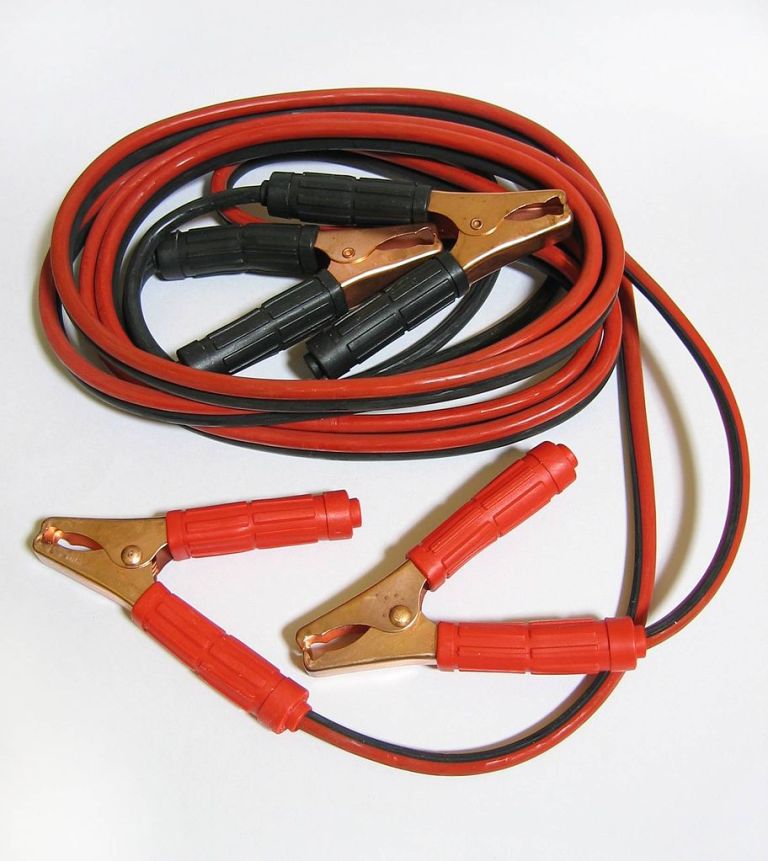
Ralph S. Mueller aimed to build a simple metal clip with spring-loaded jaws for product testing, which would find some prominence in the upcoming telephone industry. However, he would come to find that there were actually many practical uses for his clip, and today they are most commonly encountered in jumper cables.
2. The famed "Tommy Gun" of the 1920s and World War II was originally designed and constructed right here in Cleveland.

When General John Thompson conceived the idea for a handheld machine gun, he recruited Theodore Eickhoff to design it. Eickhoff came to Cleveland to do so, as the local Warner & Swasey Company was to produce the parts for the gun. On Euclid Avenue, in a small machine shop, the gun that was favored by gangsters such as "Machine Gun" Kelly and "Pretty Boy" Floyd was born. It was initially sold to the Marine Corps and police units, but it would become especially well known when, in 1938, the U.S. military recruited the gun for use in combat.
3. In Akron, the first commercial oatmeal manufacturer in the United States would go on to become the Quaker Mills Company, and they would register the nation's first trademark for a breakfast cereal.

The German Mills American Oatmeal Company, which began in 1854, quickly rose to acclaim as an influx of German and Irish immigrants boosted sales. The Quaker Oats brand name would follow the evolution of oatmeal to cereal in 1877 as the company began to market oats and eventually puffed rice and wheat. Their trademark smiling Quaker man still graces their packaging today.
4. Clevelander Bill Wambsganss hit the first and only unassisted triple play in the World Series.

The Cleveland Indians were facing the Brooklyn Robins in the 1920 World Series, and, by game 5, tensions couldn't be higher. The game was being held at Dunn Field in Cleveland, and in New York, fans crowded eagerly around radios for updates. When "Wamby" carried out the unassisted triple play, it was only the second in MLB history, and the only such play in the World Series. The teams would face off two more times before the Cleveland Indians won the 1920 World Series.
5. The first successful separation of conjoined twins had Cleveland as a backdrop.

According to the Guiness World Records, the first successful separation of conjoined twins was achieved in 1952 by Dr. Jack Geller. The twins were xiphopagus, or joined at the sternum, and were separated on December 14 at Mount Sinai Hospital.
6. The first car to be sold in the United States was manufactured here in Cleveland.

Alexander Winton owned a bicycle factory, and by 1897, he began applying his engineering skills to produce cars. In 1898, he sold a car to a man in Pennsylvania, and the sale would go down as the first automobile sale in the U.S. In that first year, Winton would sell 21 additional cars, but he would ultimately cease production in 1924.
7. Cleveland was the first city to experience Garrett Morgan's stop light, gas mask, and hair straightening oil.

Morgan truly was an innovative genius. Born in Kentucky, he would move to Ohio at the age of 16, and eventually to Cleveland two years later. During his life in Cleveland, he invented a belt fastener for sewing machines, a "smoke hood" gas mask, hair straightening cream, and a 3-way traffic signal that differed dramatically from the traditional "stop/go" type signals.
8. Breakthroughs in the invention of the modern golf ball were pioneered by Northeast Ohioans.

Coburn Haskell of Cleveland, and the Superintendent of the B.F. Goodrich Company, Bertram Work, met up for a golf date in 1898. Haskell had wrapped rubber thread around the ball, whether out of curiosity or boredom, and found that it bounced quite dramatically. Work suggested coating the ball with some sort of cover, and the end result is a modern golf ball that behaved quite differently from traditional wooden or featherie balls.
9. Clevelanders were the first people to meet Superman.

Cleveland-born high school students Jerry Siegel and Joe Shuster dreamed up Superman. They would later sell the rights to the company that would become DC Comics in 1938. Their character would go on to make his debut in Action Comics #1, and the Man of Steel went on to become an American icon.
10. The frosted light bulb was also born in Cleveland.

In light bulbs, frosted glass helps disperse the light from the filament more evenly across the bulb's surface area, an idea which was thought to be impossible to execute when electricity was in its infancy. However, in the 1920s, some supervisors thought it would be hilarious to convince newbies at the General Electric Nela Park Cleveland laboratory to try to create a process to frost lamp bulbs. They were taken by surprise when, in 1925, Marvin Pipkin successfully frosted the interior of a lamp bulb with the use of acid in a two-step process.
11. Wind turbines were also invented by Euclid-born Charles Brush.

Brush truly had a vision of the future, and he worked tirelessly to bring it to life. In 1884, he built a mansion/personal laboratory on Euclid Avenue. And by 1888, he had constructed a wind turbine generator to power it. His home was actually the first in Cleveland to have electricity, and the wind turbine kept it continuously powered for more than two decades. His legacy has influenced the Ohio landscape, dotting it with expanses of giant fans.
12. Cleveland was the first city to be fully lit by arched streetlights, which were designed by Cleveland-born inventor Charles F. Brush.

Brush was fascinated by electricity at an early age, and by the age of 27, he had designed a simple and maintainable design for a generator that powered arc lights. Thanks to his invention, in 1879, the streets of Public Square in Cleveland became the first to be fully illuminated by electric light. He would go on to redesign and perfect the design of arc lights, adding automatic functions and longevity before his company was ultimately absorbed by General Electric in 1891.
Were you already familiar with these 12 things we did first? Did any of them really surprise you? Please feel free to share your thoughts with us in the comments below.
There have been quite a few weird and strange things to happen in CLE. Looking back, it truly is incredible what has taken place in this Ohio city.
https://www.onlyinyourstate.com/ohio/cleveland/incredible-unbelievable-cle/
Discover more about our great city by going on this tour featuring some of the best hidden gems in CLE.
Subscribe to our newsletter
Get the latest updates and news
Thank you for subscribing!