This Is the One Hot Dog You Must Check Out in Maine
The “Red Snapper” is an iconic Pine Tree State fair food.
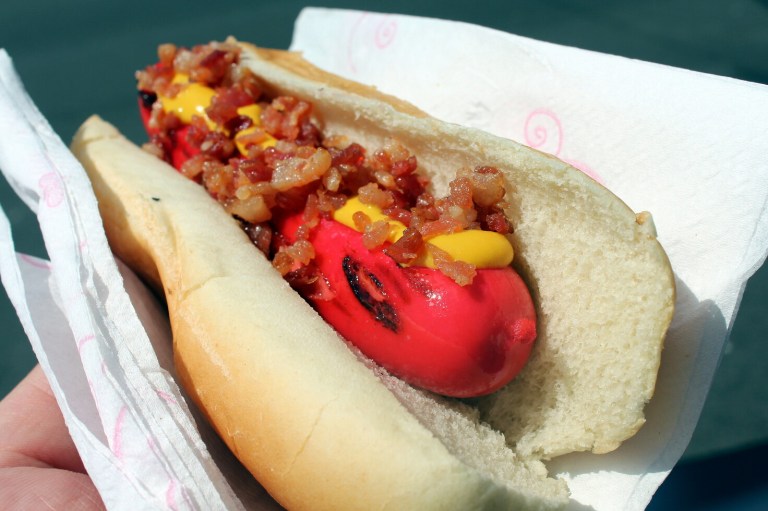
Mainers have a lot to be proud of in their state; aside from its legendary natural beauty and unique family-run businesses, there are the 25 state fairs that run every summer through fall, showcasing Maine’s agriculture, artisans, and—of course—food and drink. One not-to-miss staple of these fairs (and so many other quintessential summertime events) is the bright Red Snapper hot dog.
The most popular source for these distinct links is W.A. Bean & Sons, founded in 1860 by Albert Beans on Bangor’s Ohio Street, so you know you’ll find them at the Bangor State Fair running July 24 to 27 and the next week, July 31 to August 2. They will also be prolifically available at the Maine Red Hot Dog Festival in Dexter on August 9. If you happen to enjoy one at the Bangor State Fair, I highly recommend following it up with a deep-fried chocolate hazelnut crustable for dessert, which is a hazelnut-and-chocolate spread sandwich with the crusts cut off that’s then battered and deep fried—kind of like the more ubiquitous fair food, deep-fried Oreos, but gooey-er and more satisfying.
In 1892, Albert began vending at Bangor’s Norumbega Market, advertising in the city directory that year that he sold “native beef, mutton, and lamb,” and in 1918, he debuted his now-famous hot dogs. Five generations of family later, the company is still known for its links, as well as its spiral-sliced, honey-glazed ham at Christmas and, according to their website, is the only hot dog producer left in the state. They sell hundreds of thousands of pounds of them annually, approximately 70 percent of which are Red Snappers.

The pork-and-beef hot dogs get their name from both the bright red color the company dyes them, as well as the “snap” you can hear and feel when you bite into one. The snap is thanks to their natural casings, but the near-neon color is harder to explain: the story passed down through the Beans Family is that they wanted a way to distinguish their product from their competitor’s at the time (W.A. Bean & Sons now produces the milder-spiced Red Snappers for one of them, C. H. Rice), while others point to the German tradition of dying older sausages red to denote their discounted price due to their age; the true reason is now lost to history.
Only the outer, natural casings are dyed, while the meat inside remains the standard pink hue one expects when biting into a hot dog. Back in January of this year, the Food & Drug Administration banned the use of Red No. 3 dye from the nation’s food supply, and W.A. Bean & Sons quickly introduced a new recipe using natural red dye accepted by the FDA. They will completely phase out the use of Red No. 3 by the end of 2025, saving the tradition beloved by Mainers and visitors alike—so beloved, in fact, that Portland’s AA Boston Red Sox-affiliated baseball team, the Sea Dogs, change their name one game every year to Red Snappers, and this season it will happen on July 5.

Are you friends with a hot dog lover who needs to know about these distinct links? Share this article with them, and make a plan to visit one of Maine’s 25 state fairs this year.
Subscribe to our newsletter
Get the latest updates and news
Thank you for subscribing!