One of the Coolest Places to See Flamingos in Florida is Practically in My Backyard
Where nature finds refuge in South Florida. I learned all about the conservation mission of Flamingo Gardens.
In the heart of Davie, Florida, a quiet rural neighborhood on the outskirts of a metropolis sits a tropical paradise that remains relatively unknown. Even living in Florida my whole life, I wasn’t familiar with this animal oasis, usually opting for places like Zoo Miami or Butterfly World instead. But once I realized the mission of Flamingo Gardens and the true beauty of this small-but-mighty sanctuary, I couldn’t help but want to honor and encourage the work being done to protect and rehabilitate Florida’s native species. Armed with my latest Go Pro purchase, I set out to enjoy a day in the Florida sun in hopes of learning and observing.
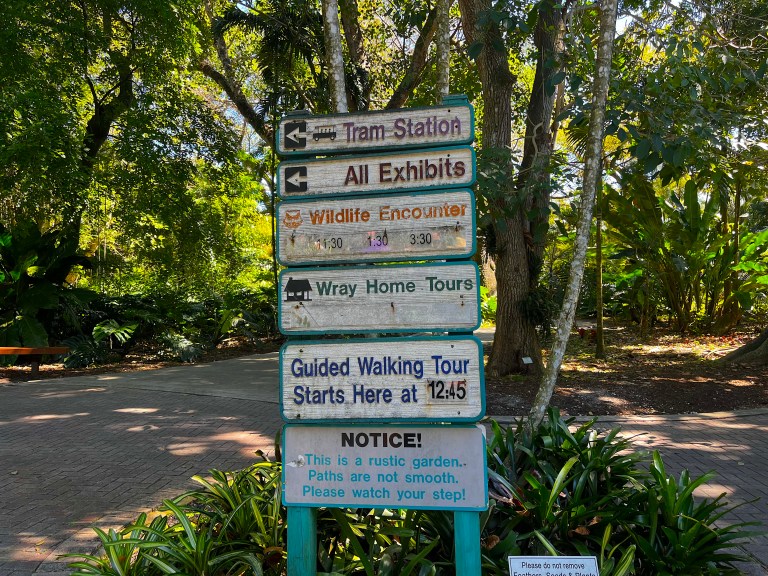
The gardens themselves are a study of botanical abundance. Towering live oaks, draped in Spanish moss, provide a canopy for an undergrowth of exotic orchids and fruit-bearing trees. But what distinguishes Flamingo Gardens from the archetypal tropical conservatory is its deeper, more profound mission: rehabilitating and sheltering Florida’s native fauna. Many of the creatures housed here—birds with wings too broken for flight, mammals unable to fend for themselves in the wild—are permanent residents, their survival contingent upon the care of those devoted to their well-being.

My first visit to Flamingo Gardens was a multi-sensory experience. Of course, the first thing that caught my eye was the namesake flamingos elegantly wading through their pond, their pink plumage glowing in the sunlight. Nearby, a variety of rescued birds, including pelicans, owls, and even a majestic bald eagle, rest comfortably in spacious enclosures. Walking through the sanctuary, I was fascinated by the diversity of animals—each with its own storied past.
However, my favorite part of the entire experience was the peacocks, free-roaming, unafraid of human beings, just showing off their feathered tails. Every once in a while, they shouted to other nearby peacocks with a loud squawk that echoed through the trees. The peacocks here seemed to own the land, and nobody minded.

Another highlight of my visit was the 25,000-square-foot free-flight aviary, a massive enclosure where injured birds have a safe space to heal and thrive. Being surrounded by one of the largest collections of American wading birds was nothing short of magical. Equally impressive is the Historic Wray Home Museum, a charming 1930s-era house that offers a glimpse into Old Florida life, preserved just as it was when the Wray family lived there.
If you have 30 minutes, I highly recommend taking the free guided tram ride around the park. Not only did I learn about the various fruit-bearing trees in this part of the park, but I also learned all about the couple that made this land possible—the Wrays. The tram ride also took me to the Butterfly Garden on the property, where various butterflies, all different colors and sizes, flitted about. It truly was a magical experience.


As I left, I felt inspired—not just by the beauty of the gardens but by the dedication of those working tirelessly to protect them for generations to come. It helps sometimes in trying times or throughout life's ups and downs to see the work being done all around you—the lives being protected, the environment being honored. This trip was a gentle reminder to me of personal responsibility—to appreciate, to protect, to sustain.
Want another South Florida natural adventure? Check out Wolf Lake Park, an underrated attraction that'll make you feel like you stepped inside a storybook.
Subscribe to our newsletter
Get the latest updates and news
Thank you for subscribing!