The Truth Behind Dudleytown, Connecticut’s “Cursed” Ghost Town
A hidden Connecticut settlement, eerie legends, and the real story behind one of New England’s most infamous ghost towns.
Hidden deep in the forests of northwestern Connecticut lies one of New England’s most infamous—and misunderstood—places. Known as Dudleytown, this abandoned settlement has long been surrounded by eerie legends, whispered curses, and stories that have only grown more dramatic over time. But while Dudleytown, Connecticut is often described as one of the most haunted places in the state, the real story behind it is far more grounded—and just as fascinating.
What Is Dudleytown, Connecticut?
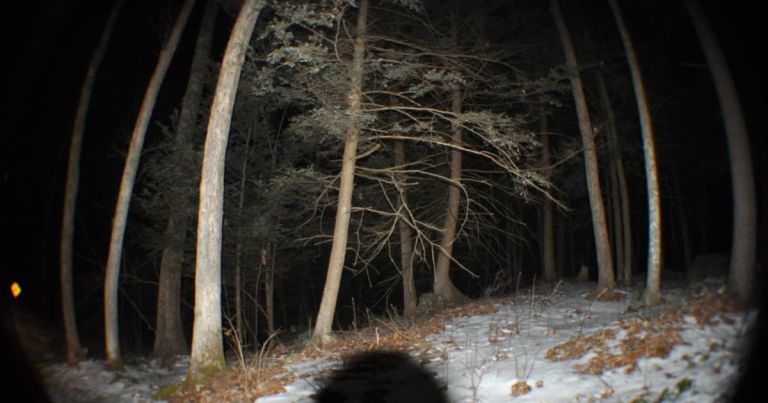
Dudleytown isn’t a town in the traditional sense, but rather the remains of a small, short-lived settlement or village tucked within a valley near Cornwall. To give a bit of history, it was founded in the mid-1700s and was home to a handful of families who attempted to build a life in what would prove to be an unforgiving landscape.
Dudleytown's land and the surrounding area were first owned by Thomas Griffis in the 1740s, and a few years later, Gideon Dudley settled here, bought acreage from Griffis, and planned to start a farm. He was followed shortly after by family members, including two brothers. The year was 1747, and the village was eventually named after him. Legend has it that Gideon Dudley's and his two brothers brought a curse to Dudleytown, thus plaguing the area with misfortune
Today, little remains beyond scattered stone foundations, stone walls, and cellar holes, slowly being reclaimed by the surrounding forest. Beginning in the 1980s, due to rumors of ghost activity, the village site was frequently vandalized, and the owners have since closed the land to the public. This notoriously haunted town in Connecticut has long attracted lore and legends, making photos of Dudleytown quite rare and sought after. Because, really, who would be brave enough to set foot in this haunted Connecticut ghost town?
Why Was Dudleytown Abandoned?

Despite being one of the most infamous Connecticut legends, Dudleytown’s decline likely had very practical causes. The area’s rocky soil made farming difficult, and its location—surrounded by steep hills and thick forests—limited sunlight and airflow, creating a damp, isolating environment. Over time, residents began to leave in search of better opportunities elsewhere. By the early 20th century, the settlement had been completely abandoned.
While later stories would suggest something more sinister drove people away from this now-abandoned town in Connecticut, historians generally agree that Dudleytown’s fate was shaped by geography and hardship—not the supernatural.
Is the Dudleytown Curse Real?
Much of Dudleytown’s reputation stems from the idea that it was “cursed,” with tales linking the original settlers to a dark family history in England. Supposedly, the curse was brought overseas by a descendant of John Dudley, son of Edmund Dudley, who was beheaded for treason by Henry VII (John, too, was beheaded at a later date, but for different reasons). John Dudley's descendant, William, left England and settled in Guilford, Connecticut; later his descendant, Gideon, came to Dudleytown. Over the years, stories about Dudleytown's misfortune evolved to include claims of madness, misfortune, and unexplained tragedies.
However, there’s little historical evidence to support the claims of a Dudleytown curse. Many of the stories appear to have been exaggerated—or entirely invented—decades after the town was already abandoned. And it truly seems to have been abandoned due to its inability to support agriculture, and that there were better opportunities elsewhere.
Like many so-called haunted and abandoned places in Connecticut, Dudleytown’s legend seems to have grown through retelling, fueled by its remote setting and eerie atmosphere.
Why You Can’t Visit Dudleytown Today

One of the most surprising facts about Dudleytown is that you can’t legally visit it.
The land is privately owned and managed by a conservation group, and trespassing is strictly prohibited. Over the years, the site attracted curiosity seekers, paranormal enthusiasts, and vandals, prompting increased protection and enforcement.
Today, the forest has largely reclaimed the area, and access remains closed to preserve both the land and its history.
Why Dudleytown Still Feels So Eerie
Even without the legends, Dudleytown has an undeniable atmosphere. The dense forest, the quiet isolation, and the remnants of a long-forgotten settlement all contribute to a sense of unease that visitors have described for decades.
It’s not necessarily ghosts or curses that make Dudleytown feel unsettling—it’s the silence, the history, and the knowledge that people once tried—and failed—to make a life there.
Why This “Cursed” Town Still Captivates People

Dudleytown continues to capture the imagination because it sits at the intersection of fact and folklore. It’s a place where real history blends with storytelling, where unanswered questions leave room for interpretation.
And while the truth behind Dudleytown may be less supernatural than the legends suggest, it’s no less compelling. In many ways, the reality that this was simply a difficult place to live and survive is what makes its story resonate. Sometimes, the most haunting places aren’t defined by what might be there but by what was left behind.
Did you know the story behind Dudleytown, Connecticut? Do you believe it has demonic ties, or that it is one of the most haunted places in Connecticut? Dudley Town, Connecticut, might be off-limits to visitors, but there are plenty of other amazing places to visit in the Nutmeg State.
Have you ever visited an abandoned town in Connecticut? Discover the story of the abandoned town under Candlewood Lake, Connecticut's largest lake.
Subscribe to our newsletter
Get the latest updates and news
Thank you for subscribing!